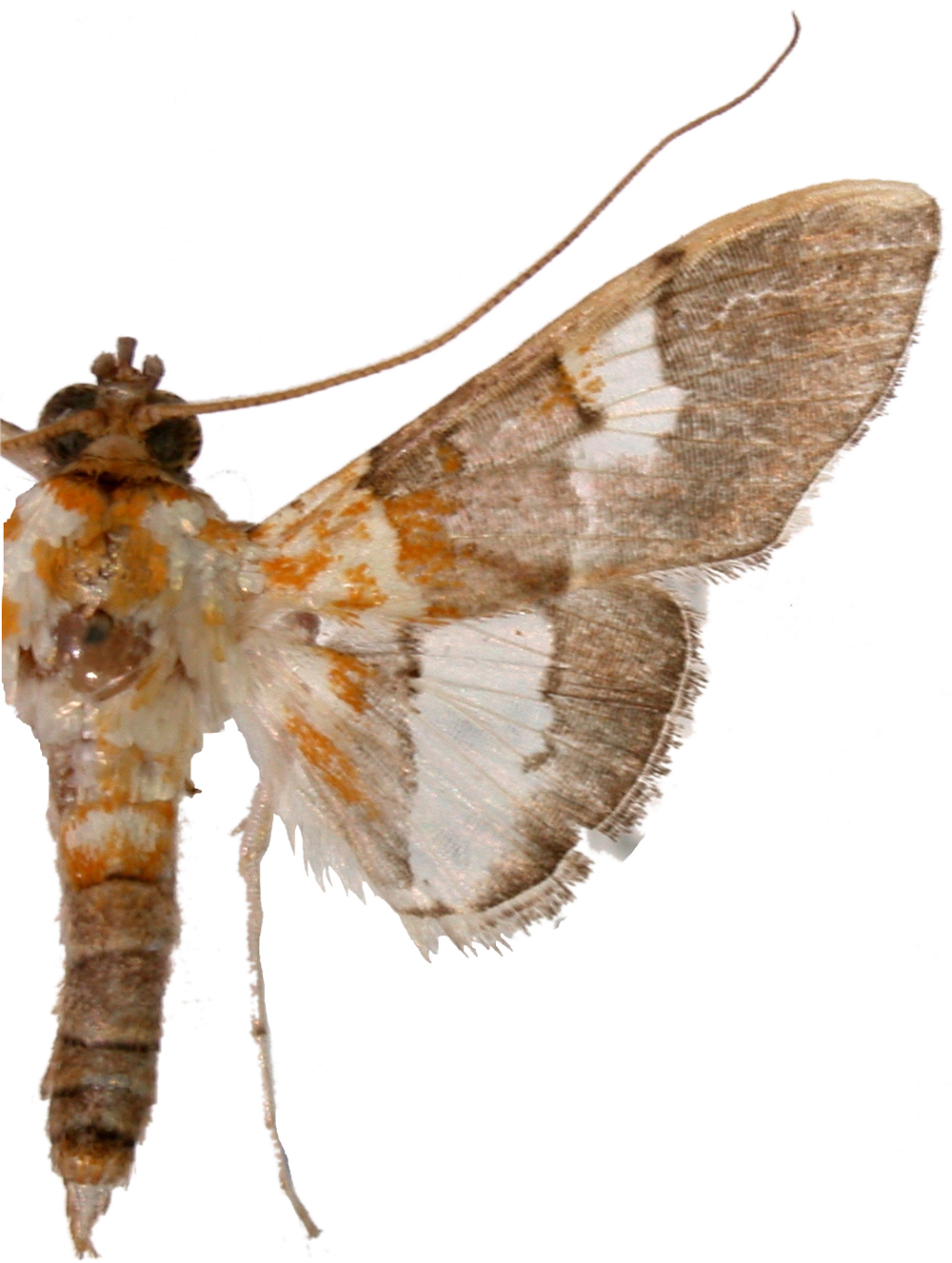
Aetholix flavibasalis Guenée
- Family: Crambidae
- Subfamily: Spilomelinae
- Tribe: Agroterini
- Genus: Aetholix
- Distribution: Sri Lanka, India (Maharashtra, Kerala, Andaman Is.), Thailand, W. Malaysia, Singapore, Sabah, Brunei, Sarawak, Kalimantan Timur, Bali, Sulawesi, Irian Jaya, Philippines, PNG, Australia (Q). China (Yunnan, Hong Kong), Taiwan, Japan.
- Habitat: Lowland: Sandy heath, Primary & disturbed forest, disturbed ground, cultivated areas <630m.
- Wing Length: 10mm
Taxonomy
- The holotype of Aediodes flavibasalis Guenée, 1854: 193 from Irian Jaya is in the MfNH (Berlin)
- syn. Aetholix cingalesa Hampson, 1893: 173, pl. 174, fig 18. TL India (Travancore). Syn. n. (Nielsen et al., 1996). It is the TS of Aetholix Lederer, 1863: 437.
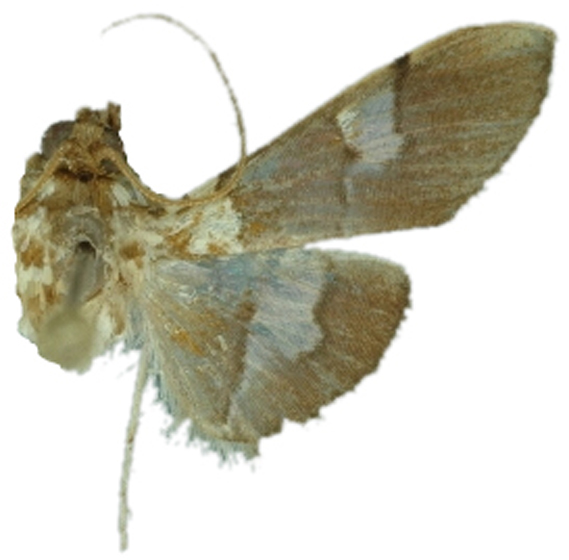
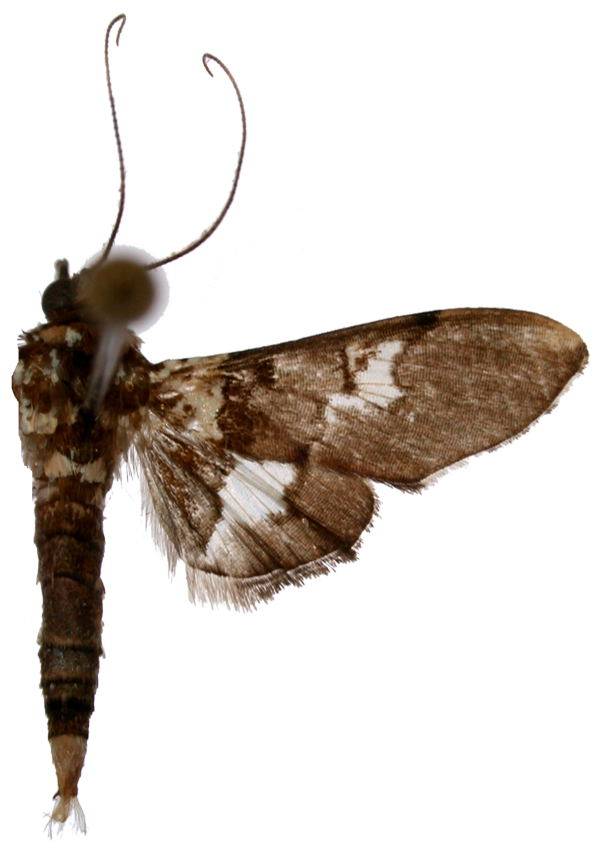
The species appears variable and there are several very similar unnamed morphotypes in which the white banding and its margins are different. These may be vars or sspp. of A. flavibasalis Guenée.
Description
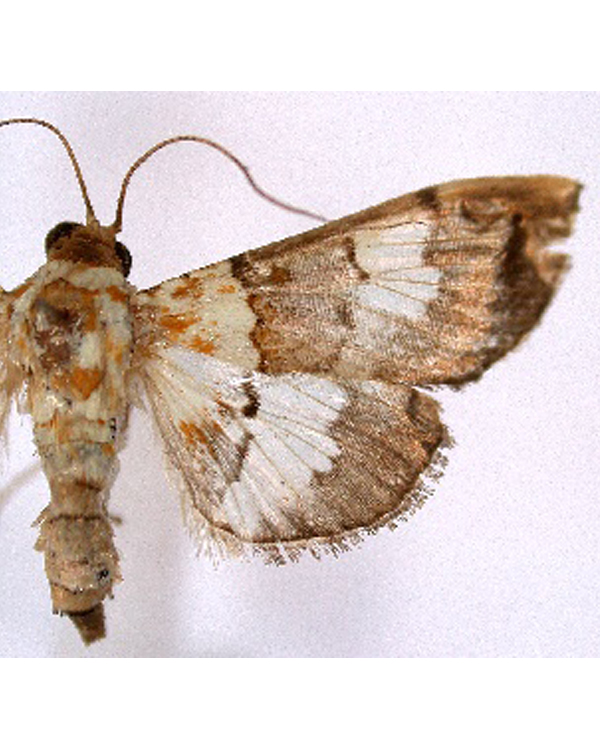
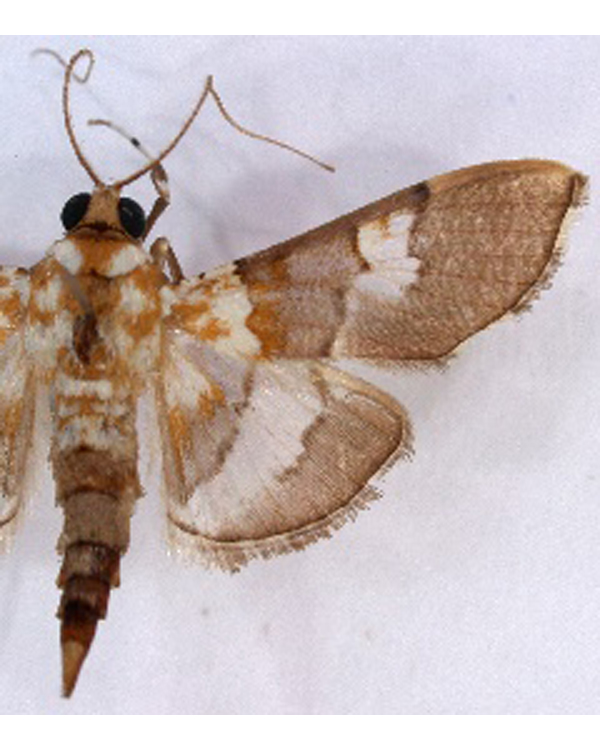
An attractive and fairly common species. The basal areas of both wings are white with bright orange patches. There are a few more orange patches on the purple antemedian fascia.
The rest of the wings are purple grey often with an orange suffusion at the margins especially on the FW costa and apex. The FW has a broad white post median band which pinches out beyond the cell continuing to the rear margin as a sinuous white line. The HW has a broad white median band across its whole width. Note the dark spot on the submedian margin of that band and that margin is almost straight.
This morphotype is similar to the DNA barcoded specimens in RMNH Leiden, (BOLD; RMNH.INS.19479 & RMNH.INS.19481) from Kalimantan Timur, (Pasir, Gunung Lumut Protection Forest).
Aetholix sp. 1 has a distinct spot on a slightly curved HW submedian line. Aetholix sp. 2 also has a spot on the submedian line but that margin is distinctly curved. There is a further complication in that there is sexual dimorphism with the abdomen of the males being very much longer.
Agrotera spp. are superficially similar but do not have the white median band.
Life History
A leaf roller and minor pest on Eugenia spp. (Myrtaceae) (RTS, 1994: 180) and Mangosteen Garcinia mangostana (Clusiaceae)
References
- Guenée, A. (1854) Deltoïdes et pyralites. In Boisduval, J.A. & Guenée, A., Hist. nat. des Insectes (Spec. gén. Lépid.) Vol. 8, 448pp. + 10 pls., Librarie Encyclopédique de Roret: Paris.
- Lederer, J., (1863) Beitrag zur Kenntniss der Pyralidinen. Wien. entomol. Monat. 7: 331-502, pl. 2-18.
- Hampson, G. F., (1893) Illustrations of typical specimens of Lepid. Heteroc. coll. B.M. 9. The Macrolepidoptera Heterocera of Ceylon. 182 pp., pl. 157-176. London.
- [RTS] Robinson, G.S., Tuck, K.R. & Shaffer, M. (1994) A Field Guide to the Smaller Moths of South-East Asia, Malaysian Nature Society Kuala Lumpur & Natural History Museum, London, 311 pp. 51 text figs, 32 pls.
- RTS (1994): 180, pl. 30, fig.16.
- Nielsen, E.S., Edwards, E.D. & Rangji (Eds.) (1996) Checklist of the Lepidoptera of Australia, CSIRO, Australia.
- Tol, J. van [Ed.] (2006) Gunung Lumut Biodiversity Assessment 2005 [The Naturalis contribution to the MOF-Tropenbos project in the Gunung Lumut Protection Forest]
- Ratnasingham, S. & Hebert, P.D.N.(2007) Barcoding - BOLD: The Barcode of Life Data System (www.barcodinglife.org), Molecular Ecology Notes (Journal compilation © 2007 Blackwell Publishing Ltd.: 10 pp.
- National Museum of Natural History, Naturalis, Leiden, The Netherlands. 24pp.