Banisia myrtaea Moore
- Family: Thyrididae
- Subfamily: Striglininae
- Genus: Banisia
- Distribution: Madras, Tamil Nadu, W. Malaysia, Singapore, Fiji.
- Habitat: Lowland forest & hill forest & disturbed areas; <600m.
- Wing Length: 30mm
Taxonomy
W. Malaysia, GTE. The male holotype of Phalaena [= Noctua] myrtaea (Drury, 1773:4) from India (Madras), is now lost, probably destroyed. Comb. n. to Banisia (Whalley, 1976:167-168, fig’d).
- syn. Durdara fenestrata Moore, 1883c: 27, pl.6 fig. 6 nec Walker [1863] 1864:78. The male holotype from India (Bombay) is in the NHM, genitalia slide #8373.
Description
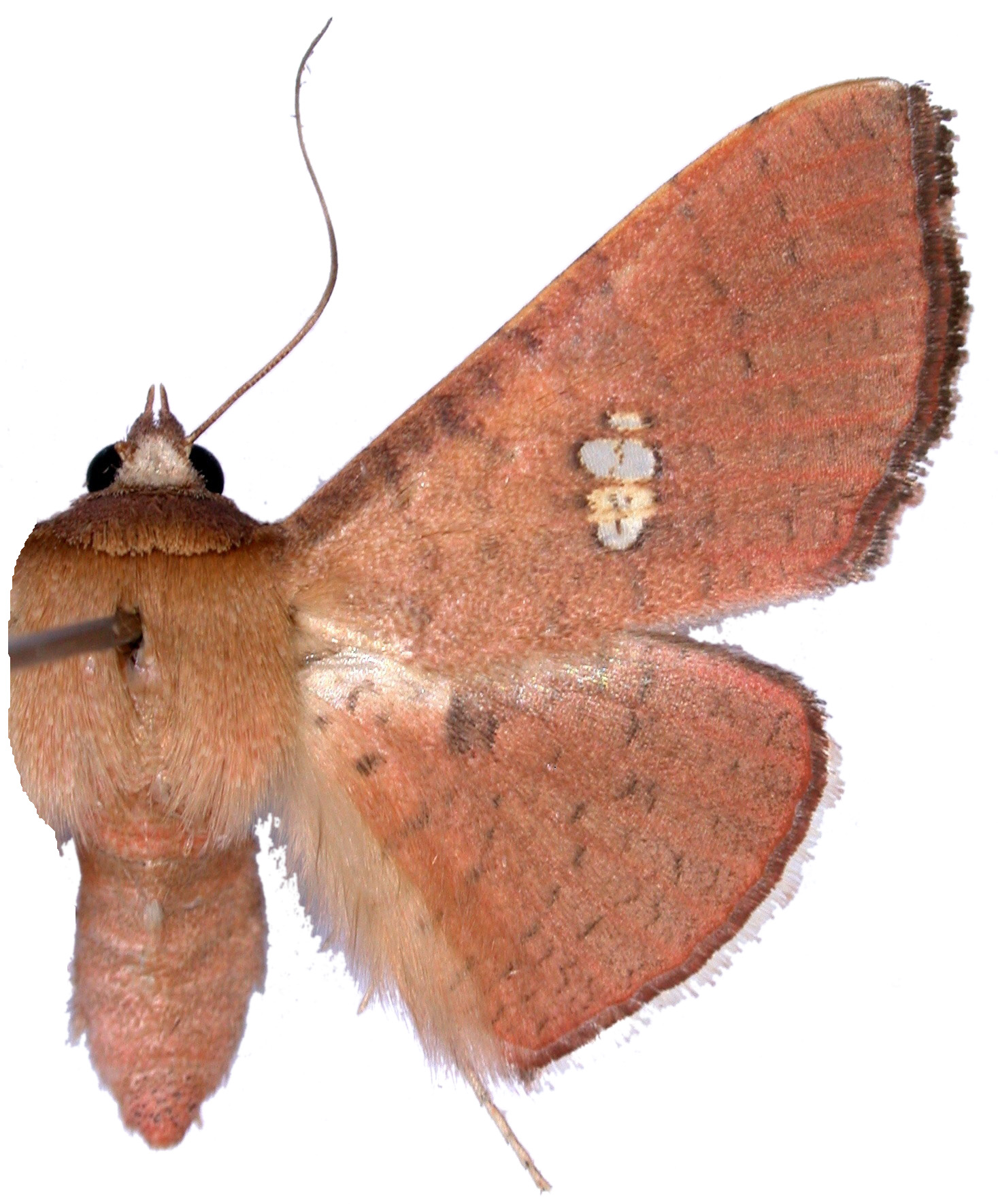
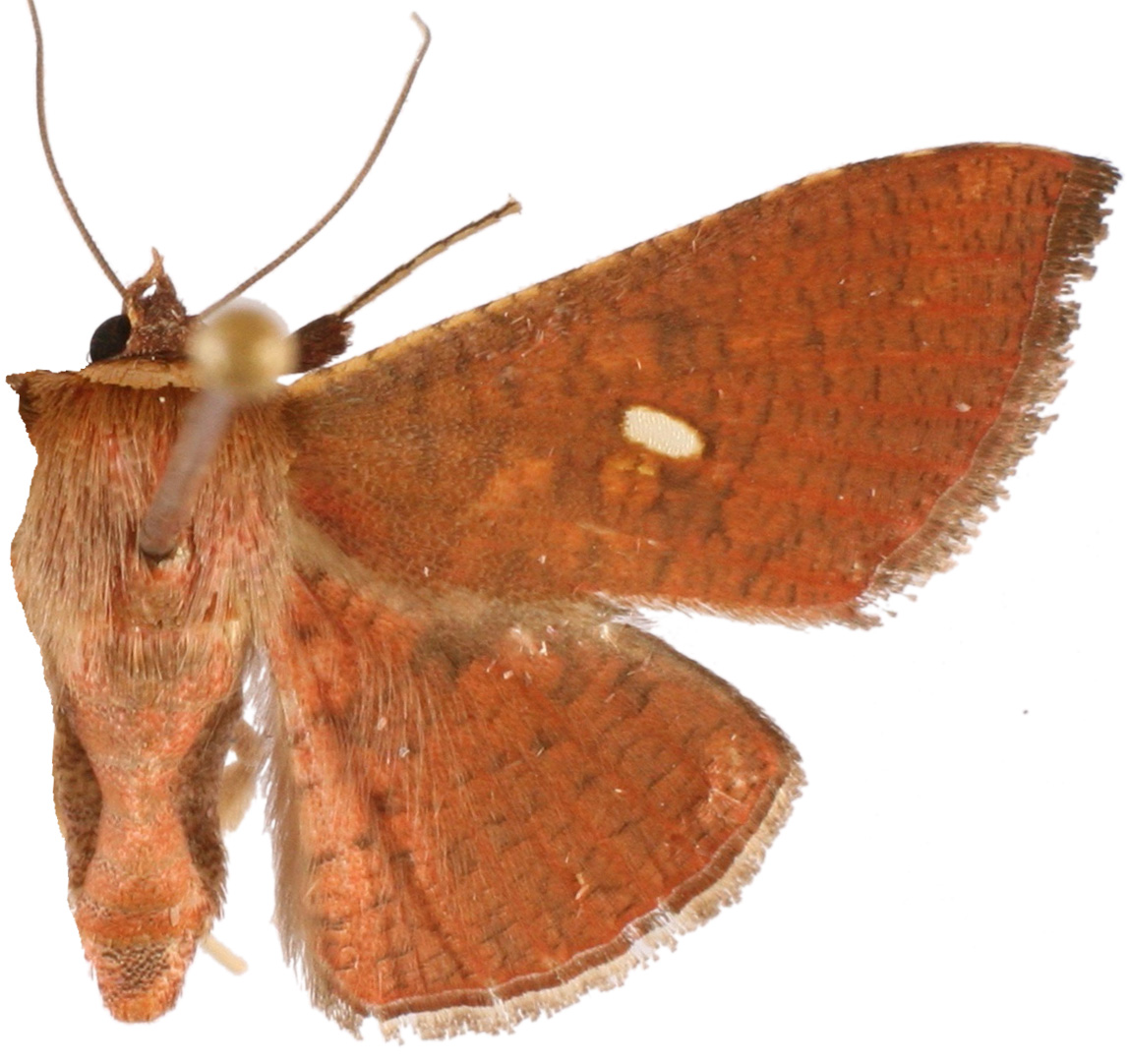
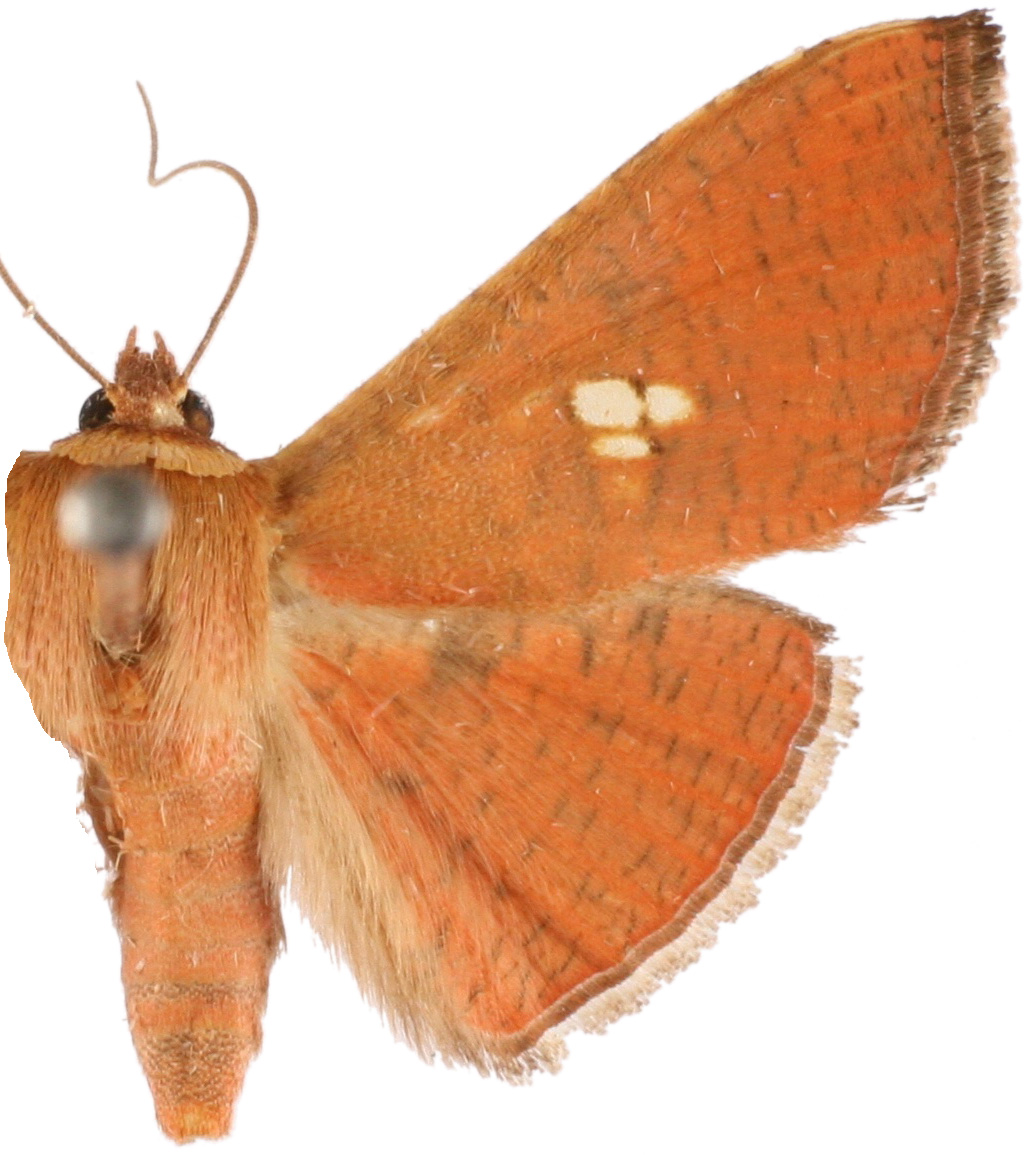
A rich red-brown medium sized species with the thyridid reticulation picked out with a pale greyish black. The FW fringe is black but the HW fringe is white. The only distinctive pattern is a patch of three pale fenestrae in the middle of the FW, although there is often a faint darker patch submedially on the front of the HW. A bilateral ab. from GTE in the HSB Coll. has one wing with the two larger fenestrae conjoined.
Its disjunct distribution needs reassessment, as do the genitalia of the female.
Similar Species
It is not possible to distinguish this species from B. fenestrifera on external markings, but the male genitalia are distinct (Whalley 1976;167). Similar also to B. cyclothyris (Hampson, 1914).
Life History
It damages leaves of Manilkara zapota, Madhuca latifolia & Palaquium gutta (Sapotaceae) (HOSTS [Accessed Nov. 2008]).